








What has happened?
- On 28 February, the US and Israel launched coordinated strikes on Iran (“Operation Epic Fury”), killing Supreme Leader Khamenei. Iran retaliated with missile and drone strikes on US bases and Gulf state territory. The conflict is ongoing with no ceasefire in sight. Iran’s objective appears to be to impose maximum economic pain while forcing its Arab neighbours to weigh the cost of hosting US assets.
- Multiple vessels have been struck by projectiles near the Hormuz Strait with JMIC finding no targeting rationale, implying indiscriminate risk. JMIC has elevated the regional threat level to CRITICAL – its highest classification – warning that further attacks on commercial shipping is “almost certain.” Significant GNSS interference across the area is degrading navigational integrity, with maritime navigation in some territorial waters and ports fully suspended.
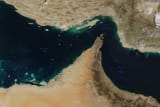
- While transits through the Strait of Hormuz are physically possible, the strait is de facto closed for most ships, either due to self-sanctioning for safety reasons, commercial or operational constraints, or because war risk insurance has been pulled or hull premiums raised to unsustainable levels.
- Iran’s conventional navy is largely destroyed (~17 warships sunk), but its asymmetric anti-ship capability is largely intact: hundreds of IRGC fast-attack craft, USVs, mobile coastal anti-ship cruise missile launchers, and mine-laying capacity. Decentralised “mosaic defence” means units follow standing orders, independent of central command.
- The cost asymmetry between the two sides favours a longer “war of attrition” – measured in weeks or months.
The Hormuz situation
- The IRGC’s posture with regards to the Hormuz has been carefully calibrated: threats of attacks on any vessel transiting has created an environment where insurance and commercial restraint does the blocking. Hormuz transits has slowed to a trickle as a result (though some night transits may be undetected as AIS will be turned off).
- Trump has stated that the US Development Finance Corp. would provide war risk insurance and guarantees for tankers transiting the strait. However, it remains to be seen how quickly a reliable solution can be set up and there are no details on who would be covered.
What about naval escorts by US and allies as in the 1980’s “tanker wars”?
- USN has privately told the industry it will lack escort capacity until the initial stage of the military operation is complete. Moreover, the US Navy may have to initially prioritize escorting ships that have a clear US affiliation (e.g. are US flagged or owned, has a US-related cargo or US crew members). However, France and other key European allies would be likely to join over time making this a broader effort.
- Physical geography favours the attacker. TSS lanes are 2 nm wide each direction; vessels transit at 10–12 kts and must turn at the narrowest point adjacent to Iranian islands. A destroyer can intercept missiles but cannot simultaneously sweep mines, counter drone-boat swarms from multiple bearings, and manage GPS disruption.
- The Red Sea precedent is instructive: 15 months of “Operation Prosperity Guardian” escorts failed to restore commercial traffic despite ~400 drones/missiles downed. However, pressure to restore normality is greater this time.
Articles
You may also be
interested in
View all


Get in touch
Contact us today to find out how our expert team can support your business