







What has happened?
- The United States, Iran and Israel have agreed to a two-week cease fire in the Middle East Gulf conflict, with negotiations for a permanent cease fire and a resolution to the conflict to continue in Islamabad, Pakistan.
- Attacks have continued on both sides overnight and so this temporary cease fire is fragile. In particular, the Israeli side disagrees that their operations in Lebanon are included. Nonetheless, we believe that this development is the start of the end of hostilities in the region.
- While there is a lack of clarity in terms of what has actually been agreed at the moment, Trump has stated that Iran’s 10-point plan is at least a “basis for negotiations”. These ten points are:
-
- Complete cessation of any aggression against Iran and allied resistance groups.
- Withdrawal of U.S. combat forces from the region, prohibition of any attacks from bases on Iran, and refraining from adopting a combat posture.
- Limited daily passage of ships through the Strait of Hormuz for two weeks, under the title of a safe passage protocol under the supervision and specific rules of Iran.
- Cancellation of all primary sanctions, secondary sanctions, and UN sanctions.
- Compensation for Iran’s damages through the creation of an investment and financial fund.
- Iran’s commitment to not building nuclear weapons.
- Acceptance by the United States of Iran’s right to enrichment and negotiation on the level of enrichment.
- Iran’s agreement to negotiate bilateral and multilateral peace treaties with regional countries in its own interests.
- Extension of non-aggression to all resistance groups.
- Termination of all resolutions of the IAEA Board of Governors and the UN Security Council, and approval of all commitments in an official UN resolution.
For shipping, the key points to watch are:
- Whether there is a drop in regional war risk premia and other insurance costs. This would signal some confidence in the safe passage of vessels.
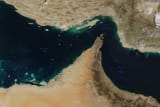
- The Strait of Hormuz effectively remains controlled by Iran, in practice the IRGC Navy, albeit potentially with a second “safe corridor” in Omani territorial waters. The language of “limited daily passage” has on the Iranian side been interpreted as a mere 10 – 15 vessels, suggesting that we would be far from any normalization (this would be only 10% of pre-war levels).
- Another question is whether the rumoured “toll fee” for the passage of vessels through Iranian waters is implemented. Iran has signalled that they see this as a way to effectuate war reparations. Any transit fee set very high (as in the rumoured $2m) would effectively rule out any trade on smaller tonnage on economic grounds, particularly for non-energy commodities (e.g. drybulk). Hence, for trade to function economically, there would have to be a pro rata fee based on vessel size.
- One major obstacle for implementing such a transit fee remains controlled by the US: The designation of the IRGC as a terrorist organization effectively prohibits any compliant shipowner to deal with them under OFAC rules. The only way for compliant tonnage to sail through the Hormuz if such a demand for transit fees is actually implemented would therefore be if there is an established safe corridor in Omani territorial waters or the US administration were to issue OFAC waivers.
- Commodity production shut-ins, either due to infrastructure damage from military attacks, lack of onshore or floating storage, or uncontrolled production shutdowns (e.g. aluminium smelters) will remain and restrict potential MEG trade volumes for months, or even years in the case of LNG.
- We anticipate that as many shipowners as possible will take this opportunity (subject to the above limitations) to sail trapped tonnage out of the MEG, for the sake of seafarers and getting these currently stranded assets out of harm’s way. This will increase the supply of tonnage elsewhere, against still-limited volume of trade in the region.
- The bigger question is the extent to which ships will also enter the region and actually start normalizing trade. Undoubtedly the economic incentives will be there, particularly for energy commodities, for opportunistic owners to take that risk. However, a two-week temporary and fragile cease fire will not be sufficient time to test the appetite for returning to the MEG on a larger scale.
- The further release of trapped “on the water” LNG, LPG, crude and distillates should cap energy prices and, consequently, stabilize ship bunker prices, for the time being. However, the five-week disruption in MEG sailings will still lead to temporary physical energy shortages globally, with future developments reliant on further normalization of transits.
- All told, Iran is likely to maintain pressure using their Hormuz trump card for the foreseeable future.
Articles
You may also be
interested in
View all


Get in touch
Contact us today to find out how our expert team can support your business