








The de facto closure of the Hormuz is rippling far beyond just direct ‘shut in’ volumes of fertilizers. As has been mentioned in previous SSY reports, the Middle East is responsible for ~50% of global sulphur volumes. While sulphur is directly used as fertilizer, it is also needed as a raw material to produce several other agri-nutrients like phosphate-based and compound fertilizers, the lack of which ultimately leads to reduced grain yields.
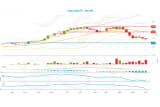
In the case of phosphates, OCP, the world’s largest phosphate exporter best evidences the impact of the loss of sulphur volumes. The phosphate market was already struggling pre-war due to rising demand for sulphur in other industries like battery metals processing. Following the war, supply disruptions drove sulphur replacement costs to the low-$700s/t CFR range. For OCP that sourced about half of all sulphur from the Middle East, this resulted in a 30% production cut for 2q26, bringing forward maintenance schedules, as reported by CRU. While the company mentioned they have strategic reserves of sulphur and finished products that would allow them to continue producing until end-July, most producers are struggling to make the economics work. According to CRU, phosphate margins are negative just from the inputs, excluding any additional processing costs.
Similarly, Mosaic also announced a reduction in phosphate production in Brazil and the US after high sulphur costs hit its profitability, however, unlike OCP, these cuts are more explicitly reactive. Ma’aden, Saudi’s primary phosphate producer has been forced to reroute shipments from traditional eastern coast terminals (Ras Al Khair, Jubail) to the Red Sea port of Yanbu, a safer but logistically constrained alternative. Since the facilities are set up in the East, each shipment from Yanbu requires thousands of trucks per cargo, limiting exports to 3-4 shipments per month. Maaden said in mid-April that it sold 60,000t DAP to Ethiopia at $900-905/t CFR, with freight to Ethiopia at ~$36/t. Mid-March Ma’aden sales to Ethiopia suggest a netback around $770/t FOB, indicating they are struggling to make the economics work even at these levels.
The second-order effects extend further still. With farmers globally exhibiting strong price resistance, the expectation across markets is demand destruction. A tiered market is quickly emerging with wealthier buyers still able to secure supplies while poorer counterparts risk being priced out. According to the Financial Times, farmers in Sub-Saharan Africa and Southeast Asia were already delaying purchases or reducing phosphate application to crops because of high prices, ultimately risking lower yields.
Other than agricultural applications, chemical manufacturing, and rubber and pharmaceutical production make up around 40% of sulphur demand. Copper and nickel ore processing are among the most sulphur-intensive operations in the mining supply chain, and disruptions to sulphuric acid availability will directly strain refining activity. Indonesia, which produces 60% of global nickel, imports 75% of its sulphur from the Middle East, which it uses to economically process the ore, according to the Oregon Group. Similarly, sulphuric acid is used a leaching agent for copper, especially for low grade ores. The Group notes that Central African copper belt imports ~2 Mtpa of sulphur from the Middle East. Sulphuric acid is most crucial where metals are recovered by leaching rather than just some smelting, hitting nickel and copper especially hard. Meanwhile, finished steel exports such as coils and bars are also impacted by the shortage, as steel pickling, the process of removing oxide scales from steel surfaces using sulphuric acid, is essential to finished steel production. With refining capacity and production constrained, expect compressed base metals and finished steel output, weighing on already strained sub-Capesize shipping demand.
Sulphur and DAP/MAP Prices

Source: CRU
DAP/MAP Exports by Source
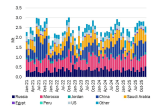
Source: CRU, SSY
Articles
You may also be
interested in
View all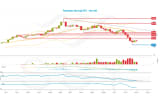

Get in touch
Contact us today to find out how our expert team can support your business